


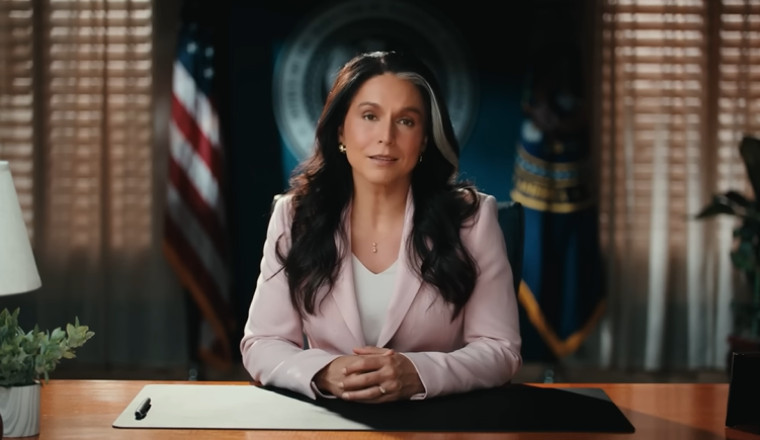
In a poignant announcement on Friday, Tulsi Gabbard, the Director of National Intelligence, revealed her resignation effective June 30, 2026, due to her husband Abraham’s recent diagnosis of a rare and aggressive form of bone cancer. In a heartfelt letter addressed to President Donald Trump, Gabbard expressed her deep commitment to supporting her husband through this challenging period.
“Regrettably, I must submit my resignation,” Gabbard wrote. “Abraham faces significant battles in the upcoming weeks and months, and I cannot, in good conscience, continue my public service while he confronts this diagnosis alone.” Gabbard’s decision underscores the personal sacrifices that often accompany public service and the profound impact that family commitments can have on one’s career.
In response, President Trump praised Gabbard’s dedication both to her role and her family, announcing that Principal Deputy Director Aaron Lukas would step in as acting director. “Tulsi has done an incredible job, and we will miss her,” Trump stated on Truth Social, acknowledging the difficult circumstances that led to her decision.
Rumors of Gabbard’s impending departure had circulated in recent weeks, despite her earlier denials. Just two weeks prior, she had assured administration officials of her commitment to her role. However, the gravity of her husband’s health crisis ultimately led her to prioritize family over her demanding position.
In her resignation letter, Gabbard reflected on the unwavering support her husband has provided throughout their eleven years of marriage, from her military deployments to her political campaigns. “His strength and love have sustained me through every challenge,” she noted. “I cannot ask him to face this fight alone while I continue in this demanding role.”
Gabbard’s tenure as Director of National Intelligence has not been without its controversies, particularly regarding her stance on U.S. foreign policy, especially in relation to Iran. Her messaging at times diverged from the administration’s narrative, leading to tensions within the White House. Reports from June 2025 indicated that Trump and his aides had grown disillusioned with Gabbard’s performance, particularly following her warnings about the escalating threats of nuclear conflict.
In a striking moment earlier this year, Gabbard publicly cautioned that the world was “closer to the brink of nuclear annihilation than ever before,” attributing the rising tensions to “political elites and warmongers.” This statement reportedly irked Trump, who perceived it as a critique of his administration’s approach to Iran. The situation escalated when Gabbard contradicted the administration’s claims during a congressional hearing, asserting that Iran was not pursuing nuclear weapons, a position that ran counter to Trump’s assertions.
Gabbard’s complex relationship with the administration was further complicated by her involvement in investigating alleged voter fraud in the 2020 election. She drew attention for her presence at the Fulton County elections office during an FBI search related to claims of fraud, a move that raised eyebrows given her position’s focus on foreign intelligence rather than domestic law enforcement.
Despite her challenges and the controversies surrounding her role, Gabbard has emphasized her commitment to transparency and integrity within the intelligence community. In her resignation letter, she expressed pride in the progress made during her tenure, stating, “While we have advanced unprecedented transparency and restored integrity to the intelligence community, I recognize there is still important work to be done.” She pledged to ensure a smooth transition for her successor.
Gabbard’s career has been marked by significant milestones. As a former congresswoman from Hawaii, she made history as the first American Samoan and practicing Hindu in Congress. Her military background as an Iraq War veteran informed her political platform, which emphasized an anti-interventionist foreign policy. After running for the Democratic presidential nomination in 2020, she later left the party and endorsed Trump, aligning herself with his administration and serving on his transition team after the 2024 election.
As Gabbard steps away from her role as Director of National Intelligence, she leaves behind a mixed legacy characterized by both her commitment to public service and the personal challenges that ultimately guided her decision. Her departure adds to a growing list of Cabinet changes within the Trump administration, following the exits of several other key officials.
In light of her resignation, Gabbard’s future remains uncertain, but her focus will undoubtedly shift toward supporting her husband as they navigate this difficult chapter together. The intelligence community will now look to Aaron Lukas to lead during this transitional period, as Gabbard’s tenure concludes amidst personal and political complexities.











Comments
0 comment