


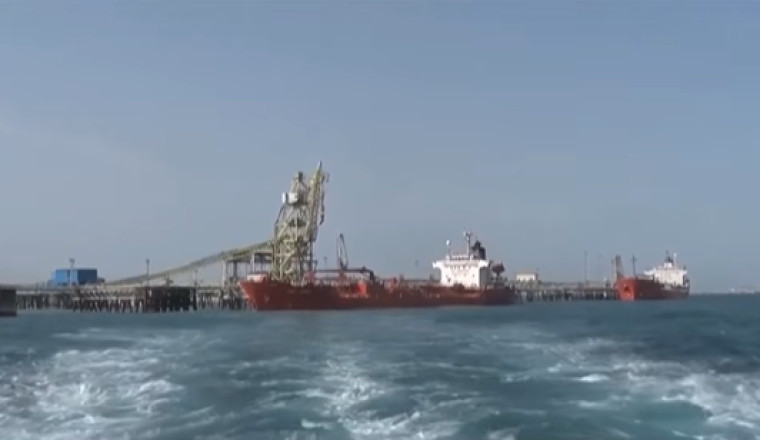
Oil prices eased on Friday after briefly surging earlier in the session due to fresh tensions and disruption in the Strait of Hormuz, one of the world’s most critical shipping routes.
Brent crude, the global oil benchmark, fell more than 2 percent after rising as much as 4 percent earlier in the day. The spike followed a decision by the International Maritime Organization (IMO) to pause its planned evacuation of vessels stranded near the strategic waterway.
The halt came after a cargo ship reported being hit by an “unknown projectile” while attempting to pass through the strait near the coast of Oman, raising renewed concerns about security in the region.
Brent futures for August delivery were trading at $73.85 per barrel at 07:30 GMT, after briefly topping $76 on Thursday. Prices remain slightly above pre-conflict levels following recent volatility tied to geopolitical tensions in the Gulf.
The Strait of Hormuz, through which roughly one-fifth of global oil and liquefied natural gas flows, has seen fluctuating shipping activity in recent days. According to vessel tracking data, transit levels briefly rebounded earlier in the week before the latest incident disrupted recovery efforts.
Market analysts say the renewed violence has once again exposed the fragility of stability in the region, particularly following a recent US-Iran ceasefire agreement.
Asian financial markets also fell sharply on Friday as investors reacted to the renewed uncertainty. South Korea’s Kospi index dropped 5.8 percent, at one point falling nearly 9 percent, driven by heavy losses in technology stocks.
Semiconductor giants SK Hynix and Samsung Electronics were among the biggest decliners, falling 8.4 percent and 5.3 percent respectively. The sell-off followed reports of rising memory chip prices, which have sparked concerns about weakening demand for consumer electronics.
Japan’s Nikkei 225 fell more than 4 percent, while Taiwan’s Taiex slipped around 3.6 percent. Hong Kong’s Hang Seng Index also ended the session down 1.7 percent.
The market reaction came after renewed fears over supply chain disruption, particularly in relation to energy transport routes and global trade flows through the Gulf region.
US officials have reportedly attributed Thursday’s attack to Iran, according to multiple media reports. Tehran has not publicly confirmed involvement.
In response, Iran’s Persian Gulf Strait Authority warned that vessels deviating from approved shipping routes would not be guaranteed safe passage, adding that operators would bear responsibility for any consequences.
Analysts say the latest incident underscores the ongoing risk to global energy markets despite earlier signs of stabilisation.
“There is a pressing need for tankers to enter and offload the high crude stocks from onshore tanks in order for normal production to resume again,” said June Goh, senior oil market analyst at Sparta in Singapore.
“Thus, security of the passageway is paramount to recover the lost supply.”










Comments
0 comment